
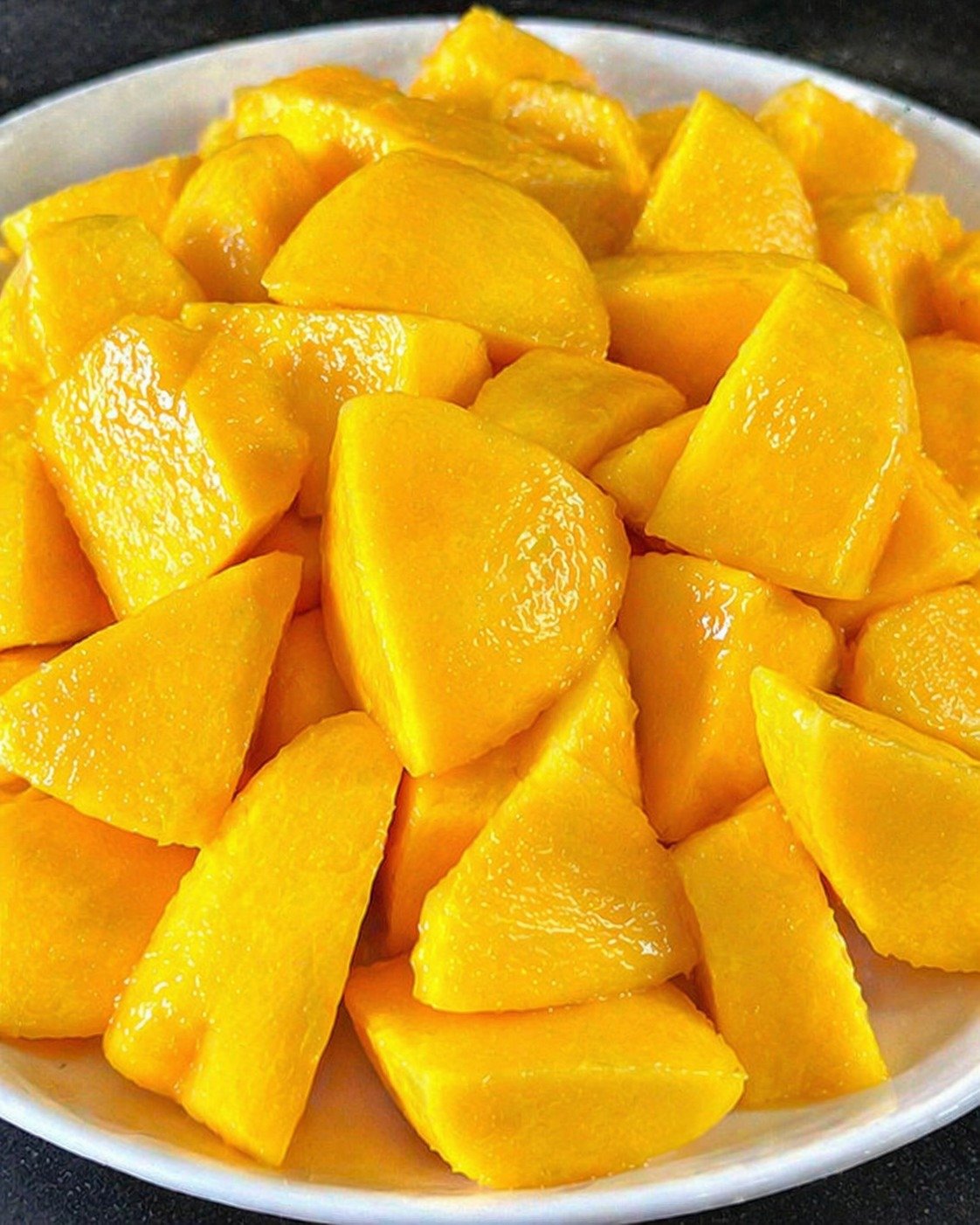
The high levels of vitamin C and vitamin E in mango fruits help to strengthen your immune system and improve your skin and hair. These antioxidants are also essential for good cardiovascular health and keeping your liver healthy, not to mention having anticancer properties. (6)
Minerals that are in abundance in mangoes such as potassium and magnesium are good for regulating your blood pressure and keeping your heart healthy. The fact that mangoes also contain many B-group vitamins means that eating them everyday can help to keep you healthy. (7)
Eating mango flesh and mango skin is also good for your digestive health because of their high fiber content.
Medical studies have shown that mango bark extracts have antiviral properties, anti-inflammatory properties, and an analgesic effect. (5)
Can You Eat Mango Skin?
Most people throw away mango peels when they prepare mangoes for consumption. However, it’s important to remember that mango skin is edible and it is very nutritious.
The outer peel of mangoes is green when unripe and gradually turns yellow, orange-red, or crimson red. Researchers say that many people eat mango skin because the peel contains a significant number of healthful compounds. (2)
For example, scientific studies have found that extracts from mango peel are good for people with diabetes. Mango skins contain polyphenols, carotenoids (both antioxidants), and fiber that have anti-diabetic properties. (8)
The peel of some varieties of mangoes may contain up to 72% of dietary fiber. The peel also contains high levels of vitamins C and E. These vitamins as well as fiber have been linked to preventing Alzheimer’s disease, cataracts, and cancer. (9)
In fact, some studies have shown that mango peel has more powerful antioxidants than mango flesh! Extracts from mango peel are a good source of phenolics that have potential use in cancer treatment. (10)
Taking into consideration that mango peel is so good for your health and is about 20% of the mango fruit, you should think twice before discarding it. (11)
One precaution when consuming the edible skin of a mango: it has been known to cause allergic reactions in some people, as well as causing contact dermatitis. (2, 12)
How to safely eat mango peel
There are many different ways that you can eat mango peel. Even though the skin of mango fruit is quite tough, you can bite into a mango the same way you would eat an apple.
It’s important to thoroughly wash mango peel before eating it to remove any pesticides.
One excellent way to eat mango peel is to chop up a mango without removing the skin and make a smoothie with the flesh and peel. This way you get all of the goodness from mango peel in a delicious health-boosting smoothie.
Some people use the skin from a peeled mango and dry it in the oven to make delicious mango peel crisps.
With some types of ripe mangoes, you can grate the zest of the mango over salads, oatmeal, or desserts to improve the nutritional content of your food.
What Are Mangoes Good For? 11 Benefits of Consuming Mango Fruit
Let’s look in more detail at the many reasons why consuming mango slices, mango puree, or mango chunks is good for your health.
Mangoes May Benefit Eye Health
Eating a serving of mangoes every day can help to protect your eyesight because they contain vitamin A and carotenoids such as lutein and zeaxanthin.
The British Journal of Ophthalmology reported that consuming fruits and vegetables containing lutein and zeaxanthin may help protect the eyes from macular degeneration. Mangoes were among some of the fruits listed that are a good source of these micronutrients. (13)
Researchers from the National Eye Institute say that nutrient-rich diets containing vitamin C, vitamin E, copper, lutein, and zeaxanthin can help protect against age-related eye diseases. (14)
Other studies have shown that getting enough vitamin A in your diet can help to protect against cataracts. (15)
One cup of mango chunks (165 g) provides you with 1262 IU vitamin A which is 25% of your RDI. This portion size also gives you 76% of your daily vitamin C requirements and 9% of your vitamin E needs. (4)
Find out other foods and herbs to improve and protect your eyesight.
Mangoes Help Lower Blood Glucose Levels
Eating mangoes every day is good for your blood sugar levels if you consume them in moderation.
A study involving men found that taking 50 grams of freeze-dried mango pulp in a shake daily helped to reduce blood glucose levels after eating. (16)
One study found that taking 400 g of mango pulp for 42 days can help to maintain a balance between blood glucose and insulin in obese adults. (17)
Even though mangoes contain a lot of natural sugar, studies have shown that eating mangoes every day doesn’t cause weight gain. In fact, mango consumption can help to lower blood glucose levels in obese women and men. (18)
Learn about the warning signs of diabetes you shouldn’t ignore.
Mangoes Can Be Good for Diabetics
More and more scientific studies point to the fact that diabetics can safely eat moderate amounts of mangoes.
Some people claim that mangoes are among the fruits to avoid if you are a diabetic. However, the journal Food & Function reported in 2015 that studies show that mangoes have a low glycemic (GI) and can help control blood glucose levels. Mangoes could potentially benefit people with type 2 diabetes. (19)
The American Diabetes Association also lists mangoes in the common fruits that diabetics can enjoy. (20)
Find out what other foods are good for you if you suffer from diabetes.
Mango Consumption Helps Keep Your Heart Healthy
The good mineral and antioxidant content of fresh, ripe mangoes mean that eating mangoes is good for your heart.
Most dieticians and doctors agree that a diet rich in fresh fruits and vegetables is good for preventing cardiovascular diseases. (21)
One study found that daily mango consumption helped to lower blood pressure in men who were not overweight. (17) Another study from 2018 found that two cups of mango intake had acute (two hour) beneficial effects on systolic blood pressure in healthy postmenopausal women. (36)
Other studies point to the fact that fruits rich in antioxidants such as mango promote good heart health and can help to prevent heart attacks. (2)
Did you know that consuming more fresh fruits and veges is just one of the simple lifestyle choices that could lower your risk of a heart attack?
Mango Can Help You Lose Weight Quicker
Mangoes are good for weight loss because of their high nutritional content and fiber content.
One study using animal subjects found that supplementing the diet with freeze-dried mango helped to improve glucose tolerance and reduce obesity. Scientists noted that mango consumption helped to prevent an increase in body fat when mice were fed a high-fat diet. (22)
Doctors on WebMD say that increasing your fiber content is an important way to lose weight safely and also manage weight loss. Fiber helps you to feel fuller for longer and can result in consuming fewer calories. (23)
Consuming edible mango skin could also be a good way to lose weight due to the fiber content. Research into the benefits of mango skin shows that the peel is made up of between 40 and 70% of dietary fiber. (24)
Other studies have shown that apart from the fiber content, phytochemicals in mango peel could have an anti-obesity effect. (25)
To help lose weight quicker, why not try some of these simple hacks to shed excess body weight and improve your health?
Eating Mangoes Is Good for Your Digestion
There are many reasons why mangoes are an excellent addition to your diet if you want to improve your digestion.
Eating mangoes is good for your digestive health because their high fiber content help make you poop easier. Fiber is essential to regular bowel movements, and one whole mango contains nearly 4 grams of fiber which is 15% of your recommended daily fiber intake. (4)
