
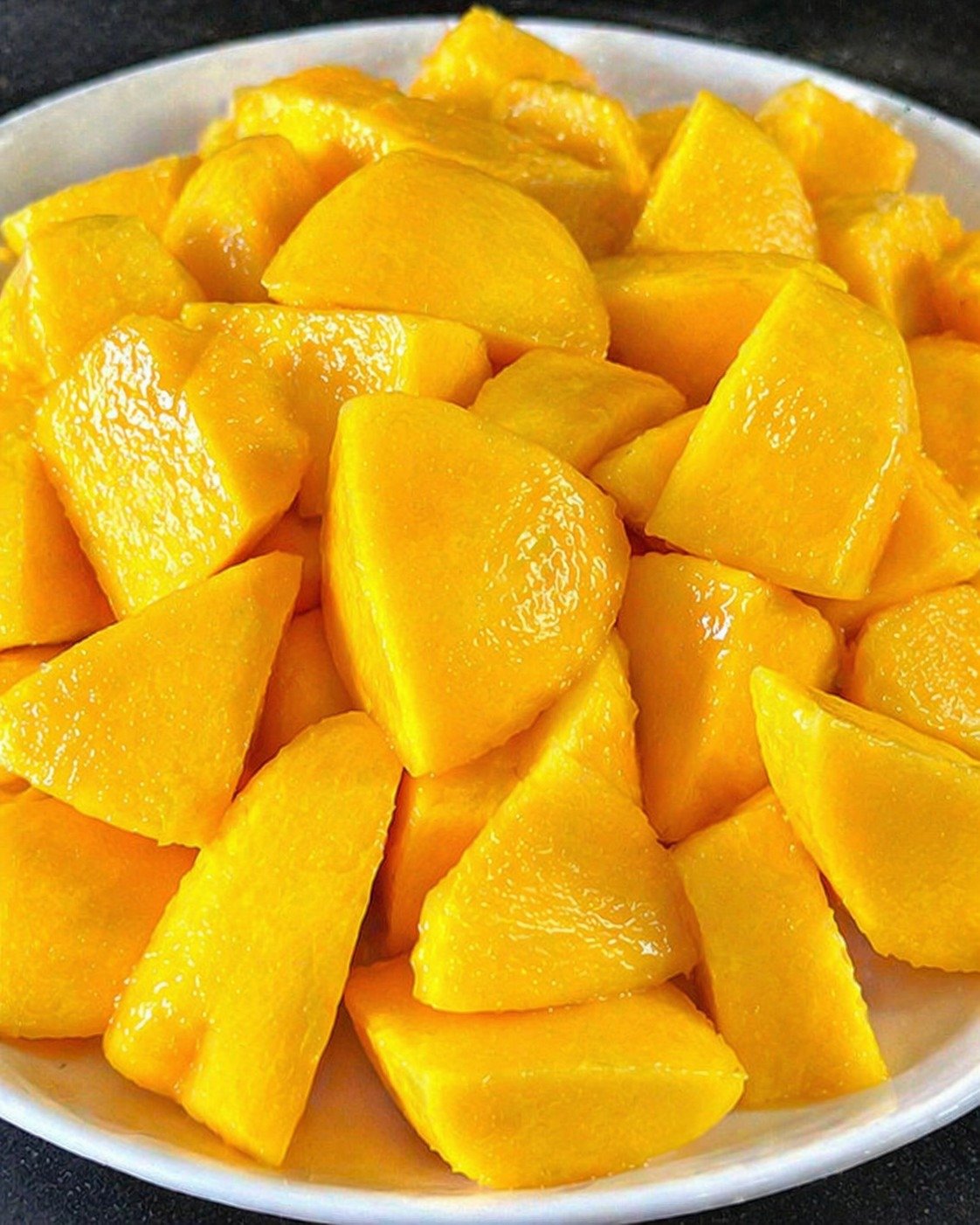
Mango is a delicious and refreshingly-filling tropical fruit that is good for your health. Mangoes are a storehouse of nutrients, vitamins, minerals, and antioxidants that help keep you healthy. Consuming mangoes is good for you because it can help to improve your digestion, keep your hair and skin healthy, help you lose weight, and protect your eyesight.
It’s not just consuming the flesh of the mango fruit that is good for you. You can also eat mango peel because the skin of a mango is a good source of dietary fiber, plant-based antioxidants, vitamin C and vitamin E.
To get all of the goodness from mangoes and mango peel, you can chop them as a refreshing sweet snack, add them to your favorite smoothies, make a savory/sweet mango salsa, or blend them into a puree.
In this article, I will look at scientific research that shows just why eating more mangoes is so good for your health.
What Are Mangoes?
Mangoes are a juicy tropical fruit that have a thick skin which protects the succulent yellow flesh inside. Mangoes mostly grow in South Asia where the Mangifera indica is the most popular type of mango.
Mangoes look like an oblong large fruit that range in size, with some varieties being up to 25 cm (10”) in length. The peel of ripe mango fruit has a leathery texture and can have a green, yellow, or reddish color. (1)
Most people say that mangoes have a sweet, tropical taste with slight tart overtones. Ripe mangoes have a very juicy flesh with a fibrous texture.
Researchers say that most parts of the mango tree and mango fruit are good for their therapeutic properties. Mangoes contain antimicrobial, antifungal, anti-inflammatory, anti-diabetic, and anti-hypertension activity. (1)
In fact, mangoes are so good for you that they are termed the “king of fruits.” (2)
Nutritional Value of Mango
The delicious, juicy taste of fresh, ripe mangoes, as well as their high nutritional value, makes it easy to see why they are one of the most popular tropical fruits.
According to the United States Department of Agriculture, a portion of 100 g of mango contains 60 calories. One cup of mango pieces (165 g) without the peel contains 99 calories. (3)
The sweetness of mangoes comes from its sugar content. 100 grams of mango flesh contains about 13 grams of sugar. Even though it seems that mangoes have a lot of sugar, it’s good to keep in mind that mango contains many healthy nutrients and dietary fiber.
One cup of sliced mango (165 g) contains about 3 grams of fiber, which is 12% of your recommended daily intake (RDI). It hardly contains protein – 0.8 g which is 2% of RDI. (4)
When compared to other fruits, mangoes contain more carbs, most of which are in the form of sugar. A cup of mango pieces (165 g) has 28 grams of carbs and a GI rating of 8. (4)
Many of the health benefits of mangoes come from their vitamin and mineral content. For example, a whole mango contains 53 mg of vitamin C which is nearly all of your daily vitamin C needs!
A cup of mango pieces also contains 25% of your daily vitamin A requirements, 1.8 mg of vitamin E (9% RDI), 6.9 mcg vitamin K (9% RDI), and high levels of many B-group vitamins.
Mangoes also contain amounts of copper, calcium, potassium, magnesium, selenium, and iron.
Research into the medicinal properties of mango has found that the fruit is rich in polyphenols which have many health benefits. These micronutrients along with vitamin C and vitamin E help to reduce inflammation and boost your body’s immunity. (2)
Nutritional Value of Mango Skin
Mango skin also has many nutritional health benefits. Studies have shown that the peel from mangoes has powerful antioxidants. Mango peel is also a good source of vitamin E and dietary fiber. The peel from ripe mangoes has more antioxidants than unripe ones. (2)
What Are Mangoes Good For?
Mangoes are great for addressing a wide range of health issues and concerns. As well as being good for eating as a tasty dessert, consuming mangoes can help to keep you healthier.
