
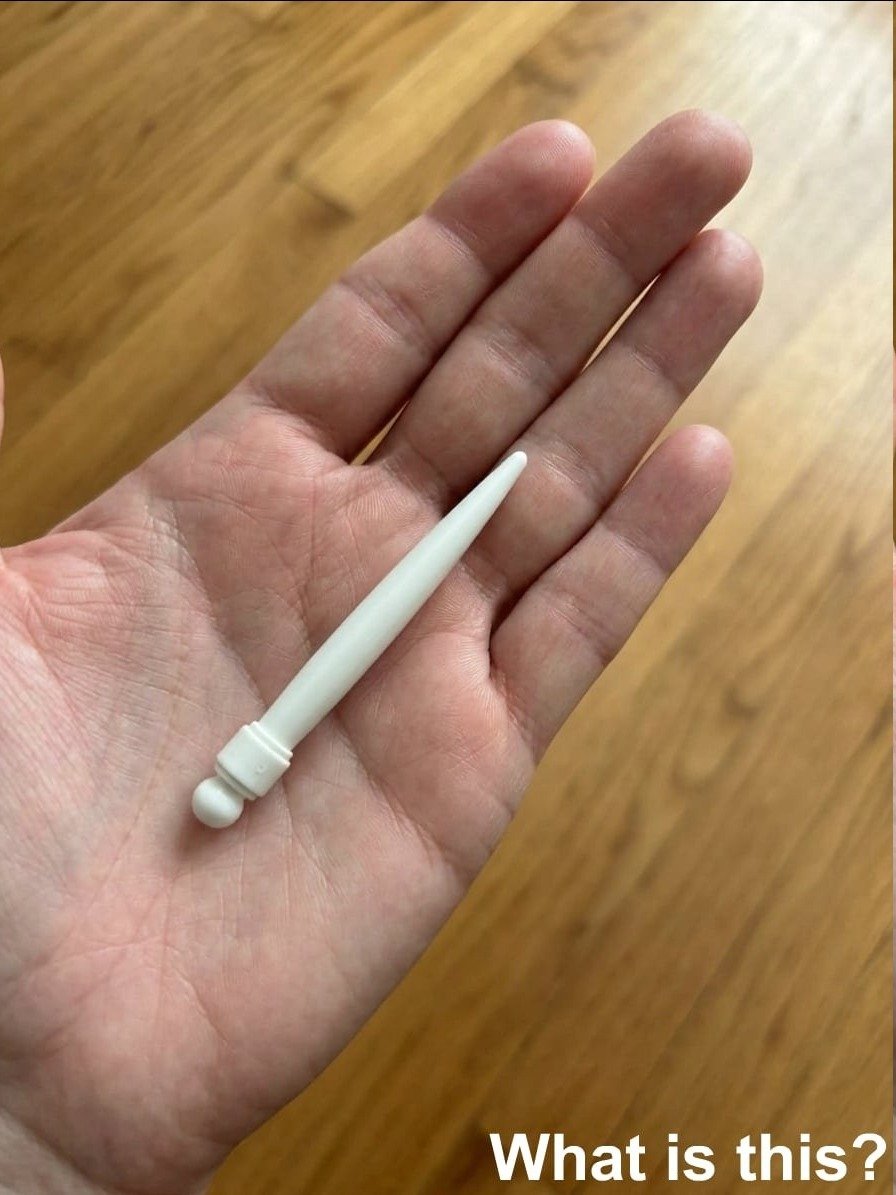
It began with hesitation. My wife stood at the edge of the bed, her hand hovering over the rumpled sheets as though touching them might unleash something dangerous. Nestled between the folds was an object so foreign to our bedroom that it felt like a rupture in reality. Small, plastic, and oddly clinical, it carried the cold aura of utility rather than comfort. She picked it up, and in that instant, our sanctuary of rest became a stage for a puzzle we hadn’t asked to solve.
We examined it like detectives at a crime scene. The translucent gray polymer felt heavier than expected, its shape defying easy categorization. I checked the television mount, convinced it might be a stray component. No match. My wife compared it to the hardware on her jewelry boxes—again, no connection. It wasn’t a kitchen gadget, a child’s toy, or a medical device. The longer we stared, the more sinister it seemed. Our imaginations began to spiral, turning a piece of plastic into a symbol of intrusion.
The atmosphere shifted. What began as curiosity fermented into unease. Was it surveillance equipment? A tool left behind by someone who shouldn’t have been in our home? We checked the locks, glanced at the windows, and let our minds script a thriller where we were the unsuspecting protagonists. All of this, conjured by a three-inch piece of molded plastic.
Then, clarity arrived. Just days earlier, our bedroom had been a construction zone. Painters had moved the bed, pried off baseboards, and sealed cracks in the plaster. Ladders, drop cloths, and the sharp scent of fresh paint had filled the air. Suddenly, the object’s industrial gray color and threaded base spoke a new language—the language of renovation. A quick search confirmed it: a disposable cartridge nozzle, the kind used to apply silicone or acrylic sealant. In the shuffle of furniture and tools, one had simply fallen onto the bed and gone unnoticed.
